Kraków · ul. Nazaretańska 12

The workshop

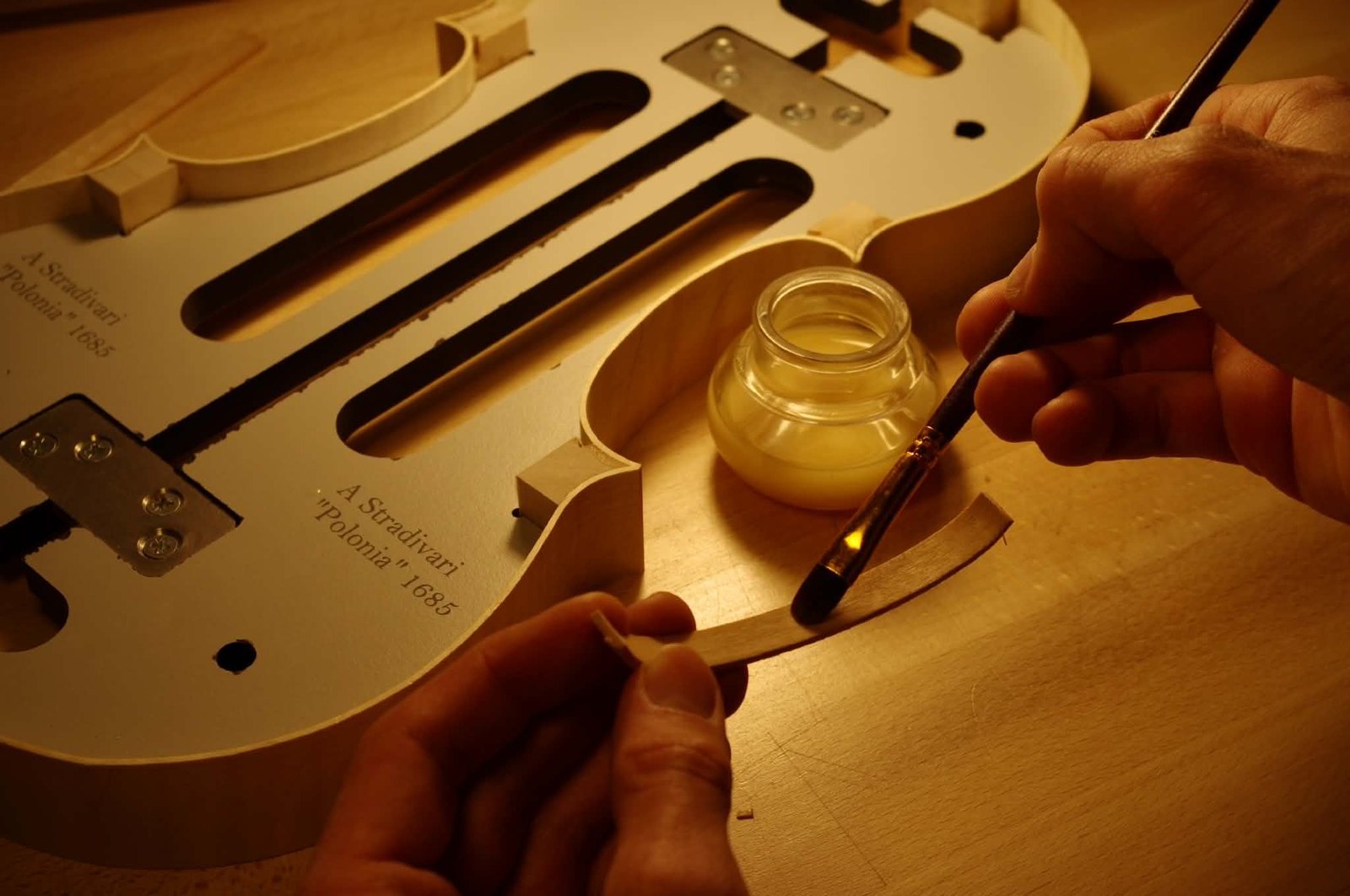
The workshop builds contemporary bowed instruments based on historical models, as well as instruments in baroque set-up, keeping to historical constructional solutions.

Repairs, adjustments and conservation work on bowed instruments are carried out — from routine set-up to more involved work at the bench.

One area of the workshop’s activity is technical documentation of historical bowed instruments using industrial computer tomography. The work includes three-dimensional models, tomographic sections, thickness maps, measurement records and constructional analyses.

From the tomographic data come moulds, working templates, arching sections and the complete technical documentation used in the analysis and reconstruction of historical instruments.

Work on an instrument

Scope of work

  • Building

    The workshop makes contemporary bowed instruments based on historical models, as well as instruments in baroque set-up. Selected models are worked out from technical documentation and tomographic examinations carried out by the workshop.

  • Repair and conservation

    The workshop carries out repairs, conservation and corrections of bowed instruments — among them the reconstruction of damage, cleaning, varnish retouching, and work restoring an instrument’s playing and visual condition.

  • Set-up and adjustment

    Preparing an instrument for playing covers fitting the bridge, sound post, fingerboard and remaining fittings, and adjusting the instrument to its own particular character.

  • Instrument documentation

    The workshop examines instruments by industrial computer tomography, both to produce technical documentation and to assess condition without touching the historical substance of the instrument. The documentation may include digital and physical 3D models, tomographic sections, technical drawings, thickness maps and measurement records.

Instruments covered by tomographic examination

Within the work of the studio, industrial computer tomography examinations have been carried out on the following historical bowed instruments:

  • Antonio Stradivari · „Polonia" — tomographic examination

    Antonio Stradivari · „Polonia"

    1685 · 3 September 2025 · Nikon M2 LES

    Antonio Stradivari (1644–1737) — the foremost luthier of the Cremonese school.

  • Marcin Groblicz — tomographic examination

    Marcin Groblicz

    17th century · 28 November 2025 · Nikon M2 LES

    A Kraków family of luthiers active from the 16th to the 18th century — one of the oldest Polish schools of violin building.

  • Baltazar Dankwart — tomographic examination

    Baltazar Dankwart

    17th century · 28 November 2025 · Nikon M2 LES

    A Vilnius luthier whose instruments were ranked alongside the finest Italian instruments.

Research facilities

Nikon M2 LES

industrial computer tomography

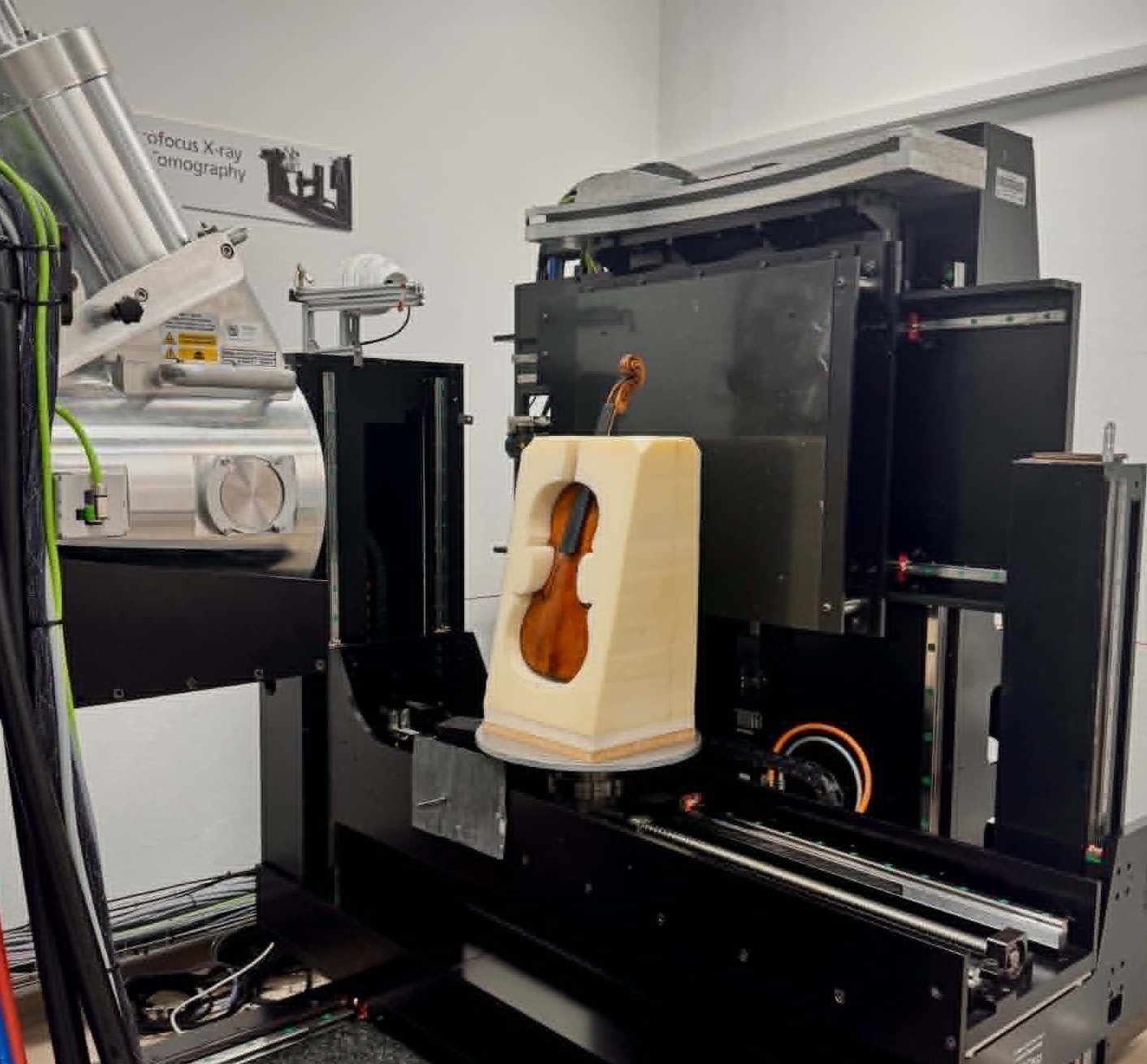
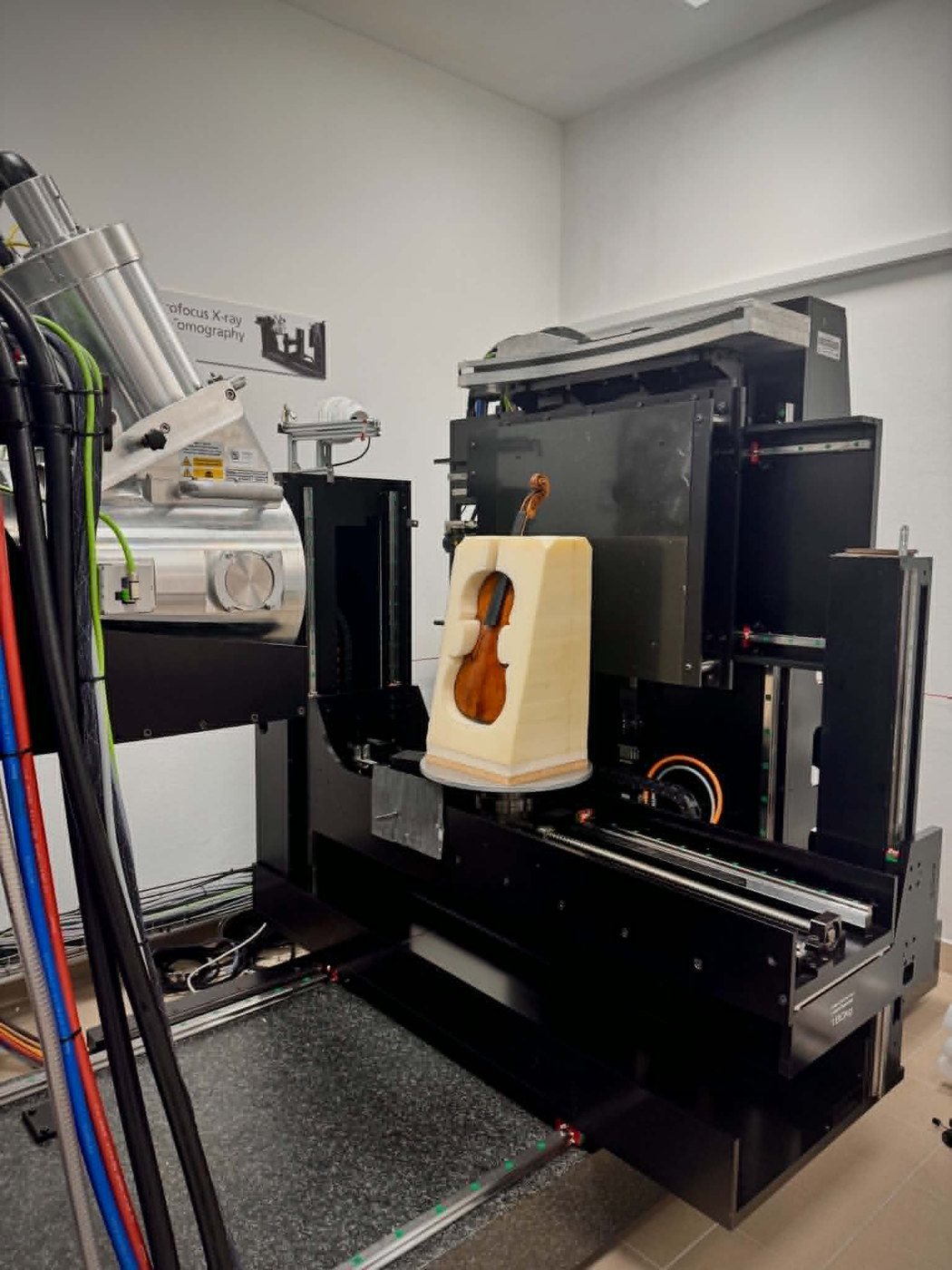
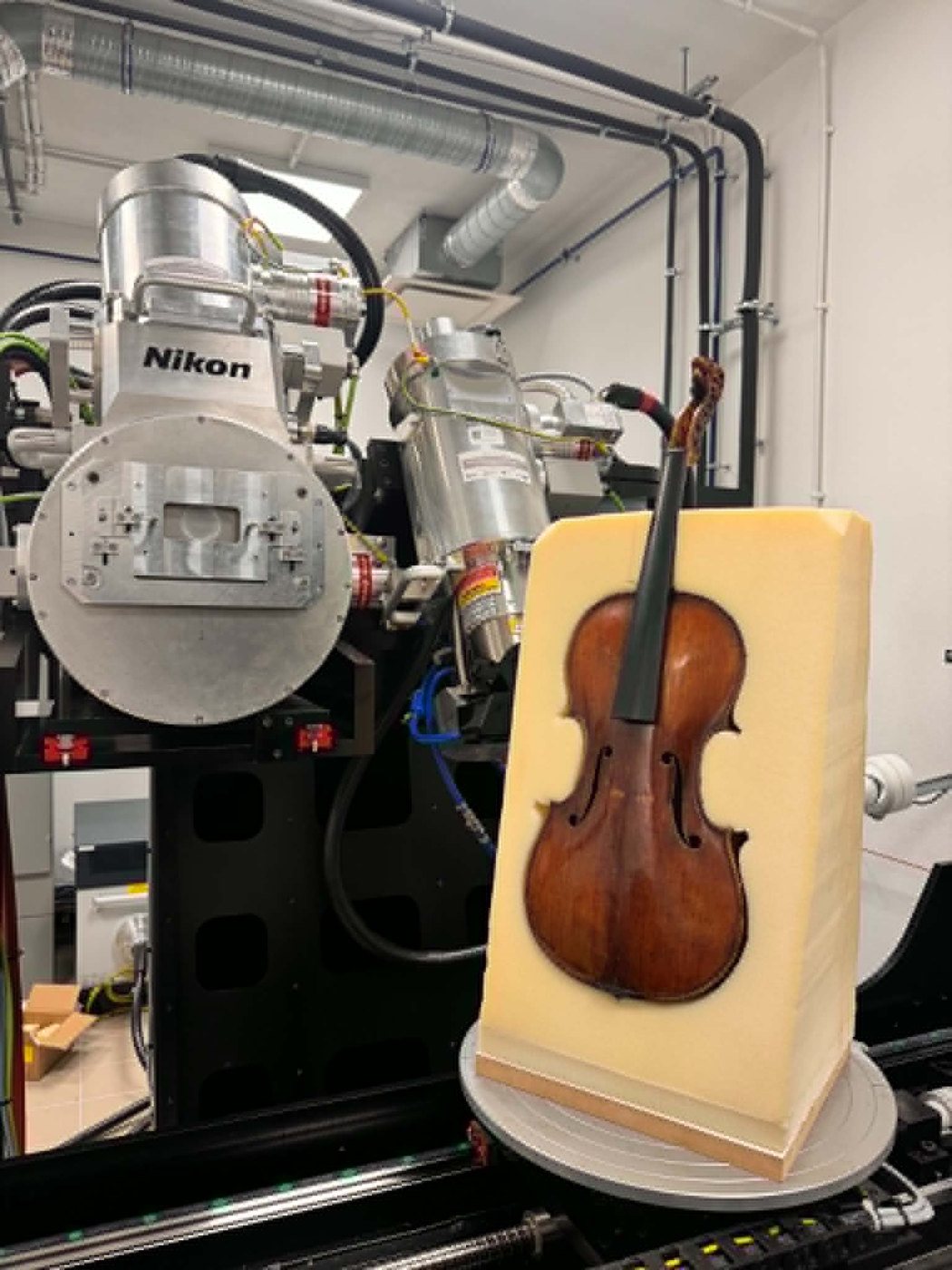
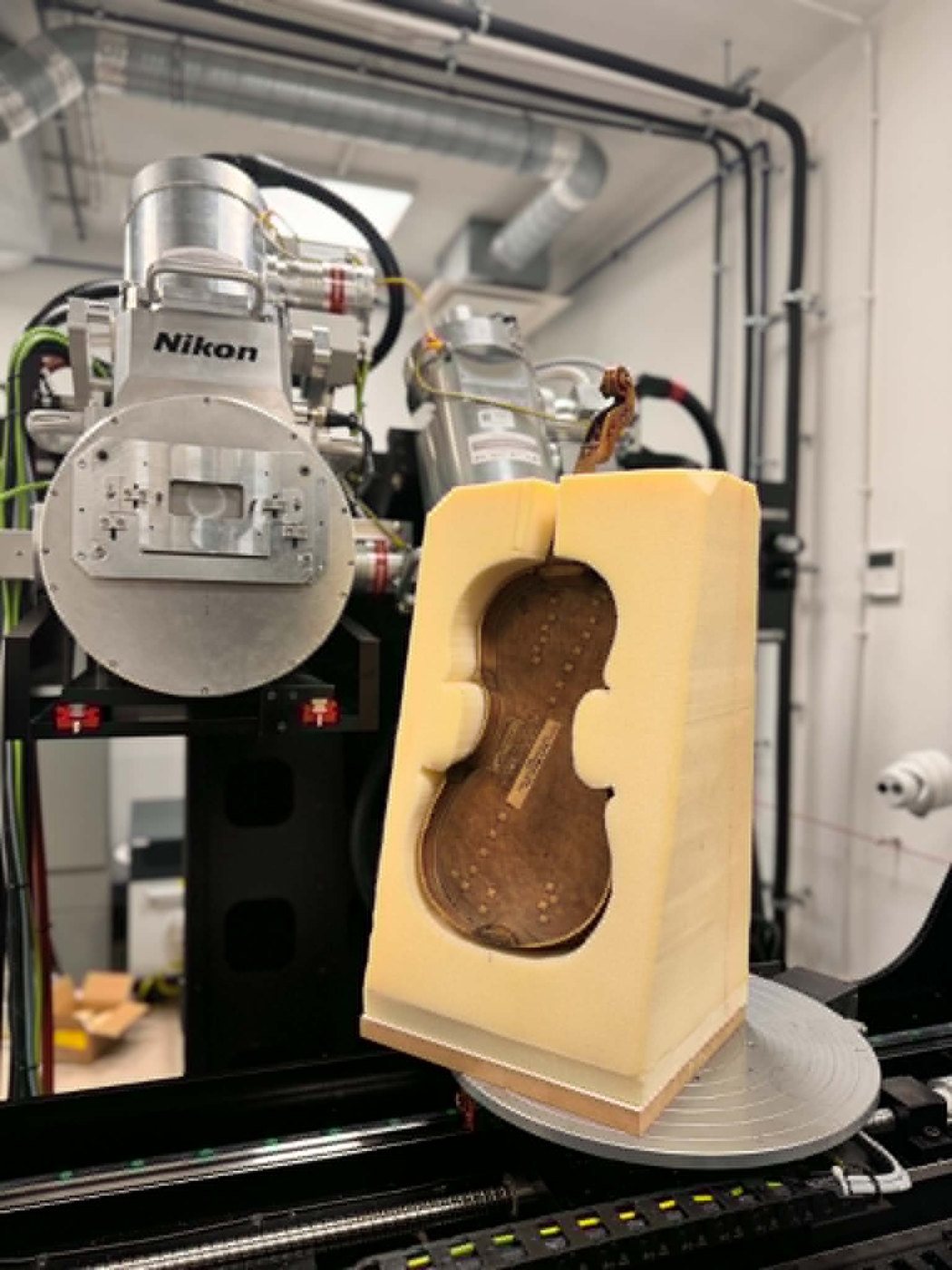
Under a collaboration with the Computer Tomography and Radiography Laboratory of the Kielce University of Technology, the workshop has access to the Nikon M2 LES industrial computer tomography system, built for precise non-destructive testing and industrial metrology.

CT system
Nikon M2 LES
System type
industrial computer tomography (Industrial CT)
X-ray sources
225 kV microfocus · 450 kV microfocus · 450 kV minifocus
Maximum energy
450 kV
Maximum source power
450 W
Focal spot
from 1 µm*
Detectors
digital flat panel detectors
Maximum specimen weight
180 kg
Working envelope
Ø 630 × 988 mm
Nature of the examination
non-contact, non-destructive volumetric examination (3D CT)

* depends on which X-ray source is used
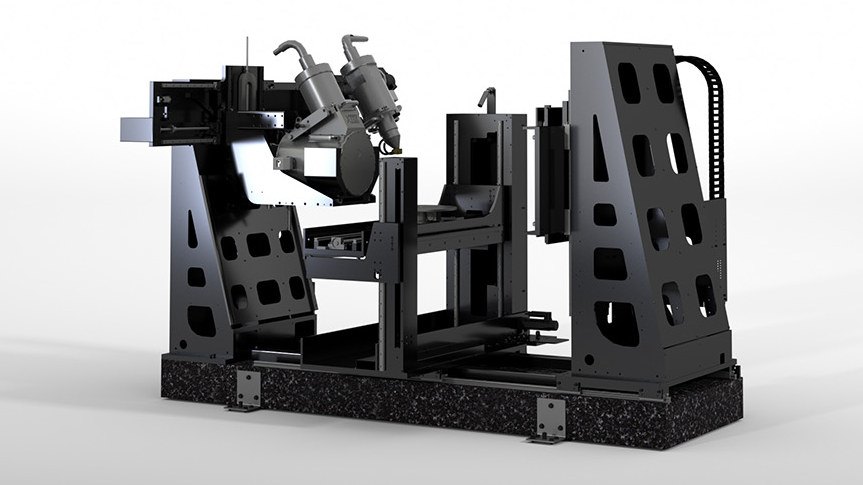
The Nikon M2 LES computer tomography system
Photo: Nikon Metrology · manufacturer’s material
The Nikon M2 LES scanner with an instrument in the measurement mount
Computer Tomography and Radiography Laboratory, Kielce University of Technology
CallDirections